
What Agencies Miss Between Audits

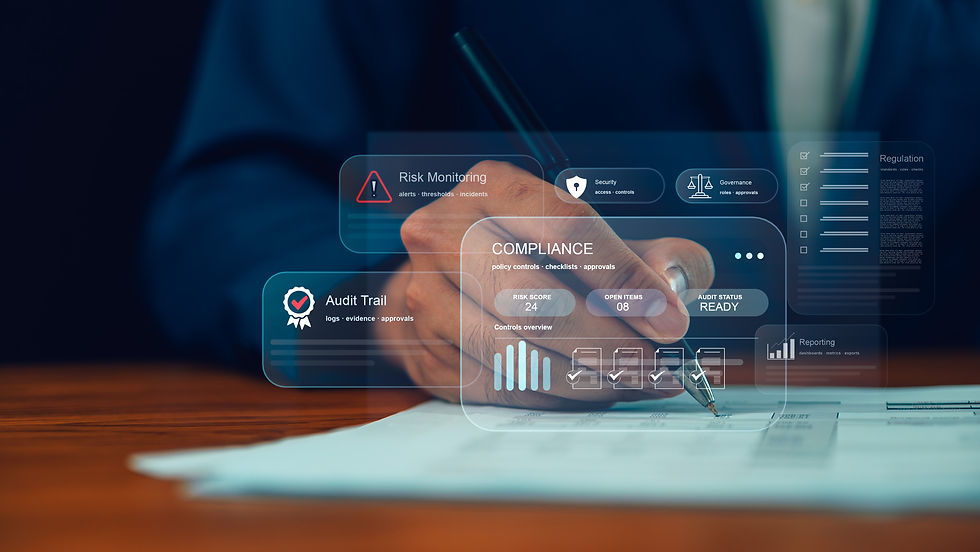
Most agencies pay close attention when an audit, review, or monitoring visit is approaching. Policies are reviewed. Documentation is checked. Supervisors follow up on overdue items.
Teams work diligently to ensure everything is in order before an external reviewer arrives.
The challenge is that compliance failures rarely begin during an audit.
They begin in the weeks and months between them.
The agencies that consistently perform well under T3C are not necessarily the agencies that work hardest before a review. They are often the agencies that have built systems capable of identifying and correcting problems long before an auditor ever arrives.
The Hidden Risk of "Passing"
One of the most common mistakes leaders make after credentialing or a successful review is assuming that approval equals sustainability.
A positive review can create a false sense of security. Leadership breathes a sigh of relief. Staff move on to other priorities. Monitoring efforts become less frequent. Over time, small gaps begin to emerge.
Training completion rates decline.
Supervision schedules become inconsistent.
Documentation varies from one employee to another.
CQI meetings continue, but meaningful follow-up becomes less consistent.
None of these issues appear catastrophic in isolation. However, when combined over several months, they can create significant organizational risk.
The absence of findings is not always evidence that systems are healthy. Sometimes it simply means no one has looked closely enough yet.
The Gaps That Grow Quietly
Most compliance challenges do not arrive all at once. They develop gradually through operational drift.
Common examples include:
Documentation Drift
Staff understand documentation expectations during onboarding, but standards become inconsistent over time. Small shortcuts become routine. Documentation begins to vary across teams, supervisors, or locations.
Supervision Inconsistency
Supervision may continue, but its quality and consistency can weaken. Discussions become operational rather than clinical. Coaching opportunities are missed. Documentation of supervision becomes incomplete.
Training Without Reinforcement
Agencies invest significant resources in training. Unfortunately, training alone does not create sustained practice. Without observation, coaching, and accountability, even strong training programs lose effectiveness over time.
CQI That Becomes Routine
Many organizations hold CQI meetings consistently but struggle to turn findings into action.
Data is reviewed, but trends are not addressed. Action items are discussed, but ownership remains unclear.
Over time, the organization begins measuring activity rather than improvement.
High-Performing Agencies Monitor Continuously
Strong agencies approach compliance differently.
Rather than viewing audits as isolated events, they view compliance as an ongoing operating discipline.
These organizations routinely ask:
Are staff consistently applying policy in practice?
Are supervisors identifying issues before they become findings?
Are training investments translating into performance?
Are CQI activities leading to measurable improvement?
Where are small issues beginning to emerge?
The goal is not perfection.
The goal is visibility.
When leaders have visibility into their systems, they can address issues while they are still manageable. Problems become opportunities for course correction rather than audit findings.
Moving from Audit Preparation to Operational Excellence
The strongest agencies create internal monitoring systems that operate regardless of whether an audit is scheduled.
They conduct routine chart reviews.
They review supervision records.
They analyze training completion and competency data.
They evaluate CQI findings for patterns and trends.
Most importantly, they create accountability structures that encourage continuous improvement.
When organizations operate this way, audits become less stressful because readiness is no longer an event.
It becomes part of how the agency functions every day.
Final Thought
Audits reveal the condition of your systems at a specific moment in time.
The months between audits reveal the strength of your systems.
As we approach the midpoint of the year, agency leaders should ask themselves a simple question:
What might be happening in our organization that no one is currently measuring?
The answer often determines whether an agency remains stable, resilient, and ready for whatever comes next.
Use this season as an opportunity to look beyond the next review and strengthen the systems that operate when no one is watching.


Comments